Top Qs
Timeline
Chat
Perspective
Wanderer W24
Motor vehicle From Wikipedia, the free encyclopedia

Remove ads
The Wanderer W24 is a middle market car introduced by Auto Union under the Wanderer brand in 1937. The car was powered by a four-cylinder four-stroke engine of 1767 cc driving the rear wheels via a four-speed gear box. Claimed maximum power output of four cylinder flathead engine[1] was 42 PS (31 kW; 41 hp) achieved at 3,400 rpm.
.jpg)
The W24's structural basis was a box frame chassis. At the back it employed a swing axle arrangement copied from the popular small cars produced by sister brand DKW of Auto Union.
At a time when some of the manufacturer's larger models featured a twelve-volt electrical system, the W24 still made do with a six-volt arrangement. The car was offered as a four-seater saloon with two or four doors. In addition, approximately 300 cabriolet versions were produced. Today, few of these cabriolet version survive: those that do are prized by collectors.
By 1940 when the increasing intensity of the war enforced an end to passenger car production, approximately 23,000 Wanderer W24s had been produced. A model belonged to Sisir Kumar Bose, the nephew of Indian nationalist Netaji Subhas Chandra Bose. Subhas Chandra Bose escaped from home arrest riding this car making his way for Germany.[2]
Remove ads
Gallery
 1937 Wanderer W24 Cabriolet
 1937 Wanderer W24 Cabriolet rear
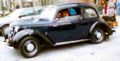 1939 Wanderer W24

_(cropped).jpg)

References
Wikiwand - on
Seamless Wikipedia browsing. On steroids.
Remove ads