Top Qs
Timeline
Chat
Perspective
Nagoya Grampus
Association football club in Japan From Wikipedia, the free encyclopedia

Remove ads
Nagoya Grampus[Jp. 1], formerly known as Nagoya Grampus Eight[Jp. 2], is a Japanese association football club that plays in the J1 League, and have for all but one season since the inauguration of the league, following promotion from the J2 League in 2017.


Based in Nagoya, Aichi Prefecture and founded as the company team of the Toyota Motor Corp. in 1939, the club shares its home games between Mizuho Athletic Stadium (capacity 27,000 and the J.League's oldest serving stadium) and the much larger Toyota Stadium in the city of Toyota (capacity 45,000).
Grampus had its most successful season up to 1996 when it was managed by Arsène Wenger, well known for his subsequent exploits at Arsenal. They won the Emperor's Cup and finished second in the J.League, with their FR Yugoslavia captain Dragan Stojković being named J.League MVP. The 1995 success was eclipsed on November 20, 2010, when the club won its first J.League trophy, under the management of Stojković.[2]
The team's name was derived from two prominent symbols of Nagoya. The first is the shachihoko (tiger-headed carp) statues atop Nagoya Castle, also called shachi; this word is a homophone with the Japanese word for orca, a species formerly referred to as "grampus". The second is the maru-hachi (circle-eight), Nagoya's official emblem. The team's mascot is Grampus-kun, an orca.[3]
Remove ads
History
Summarize
Perspective
Japan Soccer League era
Toyota Motor SC was overshadowed by its colleague Toyota Automated Loom Works SC (founded in 1946 and which was one of the founding members of the Japan Soccer League). When Toyota ALW were relegated to regional leagues in 1968, Toyota Motor saw an opportunity to rise at their expense.[4]
In 1972, the club was founding members of the JSL's Second Division and its inaugural champions. They remained in the JSL until the J.League's founding in 1993. They were relegated to the JSL Division 2 in 1977. In 1990, the club name was changed to "Nagoya Grampus Eight".
After a brief return in 1987–88, they were promoted for good in 1989–90 and remained in the top flight for 26 years, until 2016.
J.League era
Grampus Eight was an original member ("Original Ten"[a]) of the J.League in 1993. In 1996, future Arsenal manager Arsène Wenger led Grampus to the 1996 Emperor's Cup and a runners-up finish in the J.League, the club's best finish.
The team's name "Nagoya Grampus Eight" was changed to just "Nagoya Grampus" at the start of the 2008 season.[4] In 2008, Nagoya appointed former player Dragan Stojković as manager. They finished in third place and qualified for the AFC Champions League for the first time.[5] Stojković has since led the club to winning the J.League in the 2010 season, featuring a squad consisting of Marcus Tulio Tanaka, Mu Kanazaki, Seigo Narazaki, Yoshizumi Ogawa, Keiji Tamada and Joshua Kennedy.[2] After a poor 2016 season, Grampus were relegated to J2 League for the first time in their history.[6] Boško Gjurovski left his post as manager.[7] On 4 January 2017, Yahiro Kazama was appointed as the club's new manager.[8] On 3 December 2017, Grampus drew 0–0 against Avispa Fukuoka in the promotion playoff final, securing promotion back to J1 League at the first time of asking due to their higher regular season position than Avispa Fukuoka.[9] On 23 September 2019, Massimo Ficcadenti was appointed as the club's new manager. The Italian manager led the club the winner of the J.League Cup in 2021. However, Grampus didn't renew a contract with Ficcadenti, and appointed Kenta Hasegawa as their new manager.
Kashima Soccer Stadium curse
Since Grampus were dealt a 5–0 defeat by the Kashima Antlers at the Kashima Soccer Stadium on 16 May in the 1993 J.League season opener, Grampus suffered a losing streak of 22 consecutive games to the Kashima Antlers at the Kashima Soccer Stadium which included Emperor's Cup and J.League Cup games. Grampus finally got their first victory over the Kashima Antlers at the Kashima Soccer Stadium on 23 August of the 2008 J.League season, some 15 years later.
Remove ads
Affiliated clubs
 AS Roma (2022−present)
 Everton F.C. (2025−present)


On 25 November 2022, Nagoya Grampus sign partnership with Serie A club, AS Roma.[10]
On 21 August 2025, Nagoya Grampus signed a similar partnership with Premier League club, Everton F.C.[11]
In popular culture
In the Captain Tsubasa manga series, one character was player of Nagoya Grampus and is the goalkeeper Ken Wakashimazu which was player of Yokohama Flügels before the closing of the Yokohama team. In 2013, the midfielder Shingo Aoi wear the Nagoya Grampus jersey in a Yoichi Takahashi tribute to the 20 years of J.League.
Kit and colours

Sponsors
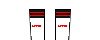
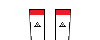
Kit evolution

















Remove ads
Current squad
- As of 15 August 2025.[12]
Note: Flags indicate national team as defined under FIFA eligibility rules; some limited exceptions apply. Players may hold more than one non-FIFA nationality.


Out on loan
Note: Flags indicate national team as defined under FIFA eligibility rules; some limited exceptions apply. Players may hold more than one non-FIFA nationality.


Remove ads
Club officials
Club Staff for 2026 [13]

Remove ads
Manager history
Summarize
Perspective
Information correct as of match played 6 January 2025. Only competitive matches are counted.


- Notes:
P – Total of played matches
W – Won matches
D – Drawn matches
L – Lost matches
F – Goal scored
A – Goals against
%W – Percentage of matches won
Nationality is indicated by the corresponding FIFA country code(s).
Remove ads
Personnel awards
 Dragan Stojković (1995)
 Seigo Narazaki (2010)

 Ueslei (2003)
 Joshua Kennedy (2010, 2011)
- Jô (2018)

- Dragan Stojković (1995, 1996, 1999)
- Ueslei (2003)
- Seigo Narazaki (2003, 2008, 2010, 2011)
- Marques (2004)
- Yoshizumi Ogawa (2008)
- Joshua Kennedy (2010, 2011)
 Danilson Córdoba (2010)
- Marcus Tulio Tanaka (2010, 2011, 2012)
- Takahiro Masukawa (2010)
- Jungo Fujimoto (2011)
- Jô (2018)
- Mitchell Langerak (2021)

- Yoshizumi Ogawa (2008)
 Arsène Wenger (1995)
- Dragan Stojković (2010)
World Cup players
The following players have been selected by their country in the World Cup, while playing for Nagoya Grampus:
Remove ads
Record as J.League member
| Champions | Runners-up | Third place | Promoted | Relegated |
- Key
- Pos. = Position in league
- Attendance/G = Average league attendance
- † 2020 & 2021 seasons attendances reduced by COVID-19 worldwide pandemic.
- Source: J. League Data Site
Remove ads
Honours
As Toyota Motor SC (1939–1991) and as Nagoya Grampus (1991–present)
League history
- Regional League (Tokai Adult Soccer League): 1966–71
- Division 2 (JSL Div. 2): 1972
- Division 1 (JSL Div. 1): 1973–77
- Division 2 (JSL Div. 2): 1978–86
- Division 1 (JSL Div. 1): 1987
- Division 2 (JSL Div. 2): 1988–89
- Division 1 (JSL Div. 1): 1990–91
- Division 1 (J.League Div. 1): 1992–2016
- Division 2 (J2 League): 2017
- Division 1 (J.League Div. 1): 2018
- As of 2025: 41 seasons in the top tier, 13 seasons in the second tier and 6 seasons in the Regional Leagues.
Remove ads
See also
- Grampus-kun (The team mascot)
Notes
- The Original Ten of the J.League in 1992 were Kashima Antlers, Urawa Red Diamonds, JEF United Ichihara, Verdy Kawasaki, Yokohama Marinos, Yokohama Flügels, Shimizu S-Pulse, Nagoya Grampus Eight, Gamba Osaka and Sanfrecce Hiroshima.
References
External links
Wikiwand - on
Seamless Wikipedia browsing. On steroids.
Remove ads