Top Qs
Timeline
Chat
Perspective
Inverkeithing
Town in Scotland From Wikipedia, the free encyclopedia

Remove ads
Inverkeithing (/ɪnvərˈkiːðɪŋ/ ⓘ; Scottish Gaelic: Inbhir Chèitinn) is a coastal town, parish and historic Royal burgh in Fife, Scotland. The town lies on the north shore of the Firth of Forth, 9.5 miles (15.3 km) northwest of Edinburgh city centre and 3.5 miles (5.6 km) south of Dunfermline.


A town of ancient origin, Inverkeithing became an important centre of trade and pilgrimage during the Middle Ages.[5] Inverkeithing was granted Royal burgh status by 1161 and was the meeting place of the Parliament of Scotland in 1354 and the Convention of Royal Burghs from 1487 to 1552.[6][7] The town witnessed the Battle of Inverkeithing in 1651, a conflict in the Wars of the Three Kingdoms. Following the Industrial Revolution, Inverkeithing developed industries including distilling, ship breaking and quarrying.[8][9]
Inverkeithing town centre is a conservation area following a medieval town plan, home to 55 listed buildings including the best-preserved medieval friary in Scotland and one of the finest examples of a medieval Mercat Cross.[10][11][12] The town's annual highland games and Lammas fair are among the oldest in Scotland.[13] Inverkeithing lies on the Fife Coastal Path, one of Scotland's Great Trails, and the Fife Pilgrim Way.
Inverkeithing railway station is a main stop for trains running over the nearby Forth Rail Bridge, and the town is home to the Ferrytoll Park & Ride. Around half of Inverkeithing's workers commute to Edinburgh city centre or Dunfermline (2024).[14] The town has a population of 4,820 (2020)[15] and the civil parish has a population of 8,878 (2022).[16]
Remove ads
Toponymy
The name is of Scottish Gaelic origin, Inbhir Céitein. Inbhir is a common element in place names with Celtic roots and means "confluence, inflow" (see Aber and Inver), thus "mouth of the Keithing/Céitein". The Keithing is the name of a small river or burn that runs through the southern part of the town. Simon Taylor notes that the name Keithing probably contains the Pictish (Brythonic) *coet, "wood", so the Keithing burn would have meant "stream that runs through or past or issues from woodland".[17][18] William Watson in 1910 hypothesised an etymological link between the hydronym Keithing and the Welsh cethin, "dusky" (cf. Bryncethin).[19]
Remove ads
Geography
Summarize
Perspective
.jpg)
Townscape
Inverkeithing lies on the north shore of the Firth of Forth at its narrowest crossing point, about 2.5 miles (4 km) from South Queensferry, 9.5 miles (15 km) from Edinburgh city centre and 6 miles (10 km) from Edinburgh Airport. The nearest city is Dunfermline, 3.5 mi (6 km) northwest.

The town is bounded to the south by the North Queensferry peninsula, to the west by Castlandhill and the M90, and to the east by Inverkeithing Bay and Letham Hill.[20] Its medieval centre lay along High Street and Church Street, but the town has since expanded to encompass areas to the north, east, and west, so that modern Inverkeithing is almost contiguous with the neighbouring settlements of North Queensferry, Rosyth and Hillend village, and Dalgety Bay.
Landscape
Topographically, Inverkeithing is situated on a raised terrace sloping down towards Inverkeithing Bay, which cuts in to the south of the town, separating it from the North Queensferry Peninsula. The vantage point from the town centre across the Firth of Forth is to Edinburgh and the Pentland Hills. In the east of Inverkeithing lies Letham Hill, a 324 ft coastal hill and broadleaved woodland.[21]

The Keithing Burn is a small river that flows through Inverkeithing. Its source is forest plantations to the northeast of the town between Dalgety Bay and Aberdour. The burn flows past the railway junction, before falling into the Inner Bay of Inverkeithing Bay 1⁄4 mi (400 m) south of the town centre at Inverkeithing Harbour.[22] The Inner Bay of Inverkeithing is an inlet of Inverkeithing Bay, a bay of the Firth of Forth.
.jpg)
Inverkeithing lies on the Fife Coastal Path, a long-distance footpath designated as one of Scotland's Great Trails. Coming from North Queensferry, the path winds around the Inner Bay, through Inverkeithing proper, and past Ballast Bank park towards Dalgety Bay.[23] The Fife Pilgrim Way also passes through Inverkeithing. Inverkeithing has two sandy beaches: Inverkeithing Bay Beach located off the Fife Coastal Path, and another located on the south shore of Inverkeithing's inner bay.[24]
Ecologically, Inverkeithing is adjacent to three sites of special scientific interest (SSSI): Carlingnose Point Nature Reserve to the south, the Firth of Forth to the east and St Margaret's Marsh to the southwest.[25][26]
Remove ads
History
Summarize
Perspective
Ancient origins
There is some evidence that during the Roman conquest of Britain, Roman governor Agricola established an encampment in the area between AD 78–87 during his war against the Caledonians.[5] By AD 142, when construction on the Antonine Wall began on the southern shores of the River Forth, it is likely any Roman settlement ended.[27]
The town's early history is tied to the founding of a church by a holy man named St Erat, supposedly a follower of St Ninian. Local tradition (recorded in a plaque on the parish church) holds that St Erat founded a church in Inverkeithing in the 5th century, but he might be identical to a "St Theriot" venerated in nearby Fordell, who is thought to have lived in the 8th century. Because the first written references to St Erat come from the 16th century, they do not provide hard evidence for Inverkeithing's early history, or even for the existence of the saint.[28]
Medieval Inverkeithing (12th to 16th century)
Inverkeithing is first documented in 1114, when it is mentioned in the foundation charter of Scone Abbey granted by King Alexander I.[29][30] In 1163 it appears—as "Innirkeithin"—in Pope Alexander III's summons of the clergy of the British Isles to the Council of Tours.[31] Inverkeithing was made one of Fife's first royal burghs—which brought with it legal and trading privileges—in the 12th century.[32][33] While the precise date is unknown, its burgh status may have been bestowed during the reign of David I,[7] and it is mentioned as an existing burgh as early as 1161 by Malcolm IV.[34] The settlement was an obvious choice to be created a burgh, as its location at the narrowest crossing point of the Firth of Forth and its sheltered bay were both strategically important.[5]
Throughout much of the Middle Ages, Inverkeithing was an important resting place and staging post for pilgrims. Travelers on their way to the shrines of Saint Margaret in Dunfermline and Saint Andrew in St Andrews would often stop in the town after crossing the Firth of Forth via the Queen's Ferry.[35] A hostel for pilgrims in Inverkeithing is documented as a possession of Dryburgh Abbey as early as 1196.[35] A Franciscan friary was established in Inverkeithing in the mid-14th century, which was also intended to serve religious travelers, and survives to this day as Inverkeithing Friary, one of the few remnants of a house of the Greyfriars to have survived in Scotland, and one of the key sights on the Fife Pilgrim Way.[5][36]
Inverkeithing's medieval church was consecrated to St. Peter by Bishop de Bernham on 24 August 1244.[37] One of the earliest accounts of life in Inverkeithing comes from the 14th-century Lanercost Chronicle. At Easter 1282, the Chronicle relates, the parish priest of Inverkeithing had "revived the profane rites of Priapus, collecting young girls from the villages, and compelling them to dance in circles to the honour of Father Bacchus, [...] singing and dancing himself and stirring them to lust by filthy language." When the priest exhibited similar behaviour during Lent, a scandalised citizen stabbed him to death.[38] The incident was used by influential archaeologist and folklorist Margaret Murray in her 1931 book The God of the Witches as support for her (now mostly discredited) hypothesis of the survival of British paganism into the Middle Ages.[39][40][41]

Inverkeithing was the last place that King Alexander III was seen before he died on 19 March 1286. The King had crossed the Forth from Dalmeny in a storm to pay a birthday visit to Queen Yolande, who was staying in Kinghorn. On arriving in Inverkeithing, the party was met by one of the burgesses of the town, Alexander Le Saucier (whose name indicates he was either linked to the King's kitchen, or the master of the local saltpans), who tried to convince the King to stay the night.[42] However, the pleas fell on deaf ears, and Alexander set off into the rainy night with two local guides.[43] The group lost its way near Kinghorn and got separated from the King, who was found dead at the bottom of a steep embankment on the next day, having presumably fallen from his horse.[44]
All the 14th century Scottish monarchs had a connection with Inverkeithing.[8] Edward I ("Longshanks") stayed in Inverkeithing on 2 March 1304 on his return to Scotland during the First War of Scottish Independence. This is evidenced by letters written here as he made his way from Dunfermline to St Andrews.[45] King Robert I sentenced Roger de Mowbray, baron of Inverkeithing, to death for treason after he sealed the Declaration of Arbroath in 1320, causing the town to be forfeited to the crown. In 1429, authorities of the Burgh were reimbursed for expenses from landing and passing through the town subjected by Princess Elizabeth, daughter of King James I.[46] In November 1504, a plague scare at Dunfermline Palace saw four African women including Ellen More, with John Mosman, the court apothecary, stay in Inverkeithing.[47]
.jpg)
Inverkeithing became an important meeting place in medieval Scotland: the Parliament of Scotland met in Inverkeithing in April 1354, during the reign of David II.[48] In 1487, an Act of Parliament during the reign of James III specified that the Convention of Royal Burghs would be held annually in Inverkeithing.[7][33] Evolving in parallel to the Parliament of Scotland, the Convention was an important representative assembly of trading towns. While the Act specified Inverkeithing as the host, it is unclear how many meetings were held there before the Convention moved to Edinburgh in 1552.[7]
By the end of the medieval era, Inverkeithing remained an important settlement. The town was one of the few Scottish burghs to have four stone gates—known as "ports"—around its medieval settlement; stone walls were added in 1557 (the last remains of which can still be found on the south side of Roman Road and the site of the east port is still visible at King Street).[49] Inverkeithing enjoyed a successful trade in wool, fleece and hides, and served as a hub of commerce for Fife. The town's flourishing was evidenced by its weekly markets and five annual fairs.[5] Inverkeithing was granted a charter of confirmation as a Royal Burgh by James VI in 1598.[50]
Early Modern Inverkeithing (17th to mid-18th century)
The Scottish Reformation deeply touched Inverkeithing. Inverkeithing Friary had been sold off to a private buyer as part of the reformation in 1559. In 1611, the parishes of Inverkeithing and Rosyth were united, with the union being formally decreed in 1618.[51] Most significantly, Inverkeithing was a hotbed for witch trials in the 17th century. In 1621 six local women were tried for witchcraft in the Tolbooth[52] and between 1621 and 1652, at least 51 people were executed for witchcraft in Inverkeithing, an unusually large number for a town of this size; the much larger Kirkcaldy only saw 18 executions in the same period.[53] The reason is believed to be a combination of cholera outbreaks, famine, and the appointment of Rev. Walter Bruce—a known witch hunter—as minister of St Peter's.[54] Bruce also played a pivotal role in initiating the so-called Great Scottish witch hunt of 1649–50. The executions were carried out at Witch Knowe to the south of town (which today is within Hope Street Cemetery and also Witchknowe park).[54][55]

A pivotal battle during the Wars of the Three Kingdoms took place at Inverkeithing. 20 July 1651, the Battle of Inverkeithing was fought on two sites in the area, one north of the town close to Pitreavie Castle, the other to the south on and around the peninsula of North Queensferry and the isthmus connecting it to Inverkeithing. The battle took place during Oliver Cromwell's invasion of the Kingdom of Scotland following the Third English Civil War. It was an attempt by the English Parliamentarian forces to outflank the army of Scottish Covenanters loyal to Charles II at Stirling and get access to the north of Scotland.[56] This was the last major engagement of the Wars of the Three Kingdoms and led to Scotland passing into Cromwell's control. Cromwell's 4,500 troops defeated a Scottish force of roughly equal size, forcing the Covenanters to abandon Stirling and march south to support Charles II. Of the estimated 800 MacLean clansmen who fought in the battle, only 35 were said to have survived, although Covenanter officer Sir James Balfour estimated the clan's losses at around 100.[57] An apocryphal account states that the Pinkerton Burn ran red with blood for three days afterwards. This was a significant episode in the history of Clan MacLean, and the 20th century poet Sorley MacLean mentions Inverkeithing in one of his poems.
In 1707, James Spittle representing Inverkeithing voted in favour of ratification of the Treaty of Union (see Act of Union).
Daniel Defoe, writing of Inverkeithing in his Tour thro' the Whole Island of Great Britain in 1724, relates that Inverkeithing had briefly become known in England in the early 1700s for a crime of passion in which Robert Balfour, 5th Lord Balfour of Burleigh, murdered an Inverkeithing schoolmaster who had married a woman Balfour loved—the nobleman was later sentenced to death, but escaped captivity by exchanging clothes with his sister.[58]
Inverkeithing was in decline following its prosperity during the medieval era. Trade had begun to decrease by the 16th century, and Inverkeithing slowly became poorer than its neighbouring settlements. Due to political and social instability, caused by both plague and war, this downward trend continued in the 17th century. In 1654, Dutch cartographer Joan Blaeu mentions Inverkeithing as "formerly a flourishing market" in his Nova Fifae Descriptio.[59] Daniel Defoe found the town to be "still populous, but decayed, as to what it has formerly been",[60] sentiments echoed by Sir William Burrell when he toured Scotland in 1758, who found it a "mean, miserable, paultry town, teaching us what to expect from its neighbouring villages".[61] At the time, the parish had a population of over 2,200,[45] and industry had become both smaller in scale and more diverse.
Industrial Inverkeithing (mid 18th to 19th century)
Inverkeithing developed many industries during the Industrial Revolution, bringing new wealth and expansion to the town. In the 18th century, lead and coal were mined, with coal being exported in substantial quantities. There was an iron foundry and, by the late 18th century, the town had a brewery, tan works, soap works, a salt pan and timber works.[5] A whisky distillery, using the water of Keithing Burn, was opened in 1795, and operated until the mid-19th century.[62] Its buildings, near the railway line in Keith Place, were later used for oil works.[63] The importance of fishing declined in line with increasing industrialisation and, by 1891, Inverkeithing only had 14 resident fishermen.[64] The Halbeath Waggon Railway opened in 1783.[65]
In 1821, merchant and politician Sir Robert Preston directed the development of Preston Crescent, a new road to the south of the town on the banks of the Inner Bay. Alongside a small stone bridge, a number of plain classical houses were built to accommodate retired sea captains, with most of the buildings surviving to this day.[66] Preston Hill is also named for Sir Robert, who erected a flagpole there intended to aid marine traffic.[67]
In the early 19th century through to 1835, a land lazaretto stood at Inverkeithing harbour for the purpose of local quarantine. This was only the second land lazaretto in Scotland, the other being housed at Dunoon.[68] In 1886, author James Simpson published "Reminiscences of childhood at Inverkeithing, or, Life at a lazaretto" about his experience on the Lazaretto.[69]
By the mid-19th century quarrying, engineering and shipbuilding were major industries in the area and, in 1831, the population increased by over 600 in a decade, due to an influx of labourers employed in greenstone quarries. The quarries provided material for major works, such as the extension of Leith Pier and some of the piers of the Forth Bridge.[45] By 1870, engineering and shipbuilding had largely ceased, and the harbour lost freight traffic to the railways. As a result, Inverkeithing was no longer on a through route for freight. Inverkeithing Railway Station had opened in 1877, and was significantly expanded in 1890 as a dual track railway following the completion of the nearby Forth Rail Bridge, which led to another surge in population and new building.[70]
Modern Inverkeithing (20th Century Onwards)


At the beginning of the 20th century, Inverkeithing became known for new industries, especially shipbreaking at Thos. W. Ward's yard.[71] Among others, the revolutionary battleship HMS Dreadnought was dismantled there in 1923,[72] as was the hull of the Titanic's sister ship RMS Olympic in 1937,[73] the Nazi Party cruise ship Robert Ley in 1947,[74] passenger steamer and later depot ship HMS Montclare in 1958,[75] and the second RMS Mauretania in 1966.[76][77] By 1925, quarrying remained a major operation and, whilst the saltworks, iron foundry and sawmill had closed, a papermaking industry had developed at the harbour.[5] Caldwell's paper mill would remain in operation until 2003[78]
The First and Second World Wars had a great impact on Inverkeithing, claiming the lives of 166: 130 in WWI and 36 in WWII.[79] On October 16, 1939, the first air raid of Britain of the Second World War took place over the Firth of Forth. Pilots of the 602 (Glasgow) squadron spotted Luftwaffe aircraft of Helmuth Pohle over Inverkeithing. At Inverkeithing orders were given to chase through broken clouds, resulting in the killing of two German crew and incapacitating the German aircraft engines.[80]
The 20th century brought change to Inverkeithing's heritage. In 1930, Inverkeithing was granted its own Burgh Arms, a coat of arms for Royal Burghs. These were based on the oldest known Burgh seals, which date from 1296 and 1357.[81] In 1975, all Royal Burghs were disbanded, ending the autonomy Inverkeithing had enjoyed since the 11th century.[82] Inverkeithing subsequently became part of Fife Council.
Culture in Inverkeithing developed during the 20th century. In 1905, Scottish oil painter Robert Hope (1869 - 1936) painted some works on Inverkeithing, his most famous an impressionist painting looking from Inverkeithing harbour towards the town entitled "Inverkeithing".[83] In 1914, Inverkeithing saw the opening of Majestic Cinema on Boreland Road. The cinema had the capacity for 1,000 people. It closed in 1960, and now houses an antique centre and tea rooms.[84] In 1971, the hard rock band Nazareth started rehearsals as a full time band in Inverkeithing. The band would become the most studio recorded Scottish rock band of all time.[85] Inverkeithing became a filming location for movies and series such as Complicity, Duck Dynasty and Karen Pirie.
Remove ads
Places of interest
Summarize
Perspective
Inverkeithing is home to 55 listed buildings, including 6 of category A;[86] the highest level of classification for "buildings of national or international importance, either architectural or historic; or fine, little-altered examples of some particular period, style or building type".[87] The heart of the medieval town was located around High Street, Bank Street, Townhall Street, and Church Street.[88][33]

Inverkeithing Friary and Gardens
One of the best surviving examples of a friary building in Scotland is the category-A listed Hospitium of the Grey Friars.[89] The friary could date from the late 13th century, with a charter in 1268 mentioning the building of a church and convent for the Franciscans.[33] The friary is mentioned in 1384, when it would have been a thriving hub for pilgrims to Dunfermline and St Andrews, comprising accommodations, cloisters, storage cellars, and a chapel.[35]
The friary was sold to a private buyer in 1559 during the Scottish Reformation and remodeled into a tenement; the building was originally cruciform.[90][91] The foundations of the north range of the complex, together with a well and several cellars, can be seen in the public gardens next to the hospitium, which overlook the Firth of Forth.[35]

Inverkeithing Mercat Cross
Inverkeithing's Mercat Cross is one of the oldest and finest remaining examples of a mercat cross in Scotland, dating from 1389.[88][92] The cross, a category-A listed historic monument,[93] is believed to have been built as a memorial of the marriage between the Duke of Rothesay and the daughter of the Earl of Douglas.[88] Two of the shields on the cross bear the arms of Queen Anabella Drummond and the Douglas family.[88] Later, a unicorn and a shield depicting the St Andrew's Cross were added in 1688, the work of John Boyd of South Queensferry.[88][94]

Inverkeithing Town House
On Townhall Street is the A-listed Inverkeithing Town House (also known as the Tolbooth), which displays the old town coat of arms above the front door.[88][95] The Renaissance tower, at the western end of the building, is the oldest part of the tolbooth, dating from 1755.[94] A three-storey classical building followed in 1770 as a replacement for the previous tolbooth.[94] The building featured a prison or 'black hole' on the ground floor, the court room on the middle and the debtors' prison on the top.[94] The building was fully renovated and remodelled for community use from 2022 to 2024.[96]

St. Peter's Church
Inverkeithing Parish Church of St. Peter was founded by Waltheof of Allerdale, son of Gospatrick, as a wooden Celtic church before being adapted into a Norman stone structure, which was bequeathed by the monks of Dunfermline Abbey in 1139.[88] The Norman foundations were reused for the 13th century Gothic structure, and a tower was added in the 14th century. Extensive fire damage occurred in 1825, although the 14th century tower survived.[88][97] The main part of the church is a large neo-Gothic 'preaching box' of 1826–27, designed by James Gillespie Graham.[98] The tower is crowned by a lead-covered spire from 1835 designed by Thomas Bonnar, whose elaborate gabled dormers saw clock faces being added in 1883.[90]
The church's interior is graced by one of the finest medieval furnishings to survive in any Scottish parish church: a large and well-preserved sandstone font of around 1398, which was concealed at the Reformation. Its octagonal bowl is decorated with angels holding heraldic shields, including the royal arms of the King of Scots, and of Queen Anabella Drummond, the consort of King Robert III.[90] The carving was a royal gift, Inverkeithing being a favourite residence of Queen Anabella. Most of the interior visible today was designed by Peter MacGregor Chalmers and dates from 1900.[98] Notable ministers include Robert Roche (Moderator of the General Assembly of the Church of Scotland in 1613) and witch hunter Walter Bruce, who served as 'Constant Moderator' of the Church of Scotland from 1662 until 1673.

Fordell's Lodging
Fordell's Lodging is opposite St Peter's Church and is a rare L-plan baronial tower house which dates from 1666 to 1671. The house was built by Sir John Henderson of Fordell, whose family held the office of hereditary provost and sheriff of Inverkeithing by a grant of Queen Mary.[88] Awarded category A listing from Historic Scotland, the listing describes Fordell's Lodging as "one of Inverkeithing's most intact 17th century buildings" and "a very fine example of a 17th century town house built for a local landowner in one of the wealthy coastal towns of Fife".

Thomson's House
Thomson's House is an exceptionally preserved and pre-eminent example of a traditional burgh town house. Located on Bank Street, between numbers 2–4, the house dates from 1617, and was reconstructed in 1965. The home is notable for its carved sandstone pediment, which includes thistle-shaped finials and the initials of the first owners John Thomson ("I.T.") and Bessie Thomsoun ("B.T."). In December 1972, the house was granted grade A listing by Historic Scotland. Their statement of special interest for Thomson's House indicates: "[the house] is the best-preserved example of 17th century domestic burgh architecture in Inverkeithing and is a pre-eminent example of its type, similar to some of the best buildings in Culross".[95][99]
Other Historic Buildings
Moffat Cottage on Heriot Street was the home of missionary Robert Moffat, father-in-law of Victorian explorer David Livingstone.[100] A commemorative plaque indicates that Livingstone occasionally stayed at the cottage, including after his first return to Britain during 1856/57.[101] Other notable historic residential buildings include: Providence House, a well preserved 17th century tenement featuring a carved stone lintel from 1688 with the words 'God's Providence is my Inheritance';[102] the 16th century or earlier Rosebery House owned by the Earl of Dunbar and the Rosebery family, possibly the oldest surviving house in the burgh;[103][88] and Spencerfield House, originally built around 1592 by Henry Scott (d. 1616).[104]
The Burgh Arms Hotel and Pub dates from 1664, making it one of the oldest pubs in Fife.[105] Another pub, the Half Crown pub on the high street, dates from the 17th century, and is notable as the former home of Samuel Greig during the 18th century.[106] St. Peter's Episcopal Church, dated 1908, is an Edwardian church built to accommodate the growing number of episcopal residents following the church's re-establishment in Edinburgh in 1878.[107][108]
Remains of historic sites in Inverkeithing include the remains of the East Port of Inverkeithing Town Wall, which stood from 1503 to 1773[109] and the remains of Scots Mill - dating back to at least the mid 18th century.[110]
Outdoor landmarks

Ballast Bank Park is Inverkeithing's largest public park. Located on the shore, the park features public athletics track, playpark and skatepark. The park is home to Inverkeithing Hillfield Swifts FC and hosts community events such as the Inverkeithing Highland Games, an annual firework display and Divit Fest.[111][112] Witchknowe Park is a small park where those accused of witchcraft were executed in the 17th century.[113]
Inverkeithing War Memorial and gardens, built in 1923, is a memorial for the 166 Inverkeithing men lost in the First World War and Second World War.[114] Inverkeithing Hope Street Cemetery features Commonwealth War Graves. Older graves dating back to 1606 are found at St Peters Kirkyard.[115]

Inverkeithing Harbour is where Keithing Burn meets Inverkeithing Bay, and was first recorded in 1587, and was a probable landing place for the Queensferry passage during the 12th century. It was the terminus of the 18th century Halbeath Waggon Way.[116] Prestonhill Quarry is 19th century water filled former quarry popular for fishing, diving, kayak and open water swimming.[117] Letham Hill is a coastal hill and woodland in the east of Inverkeithing.


Remove ads
Local community
Summarize
Perspective
The town is considered a commuter town of both Edinburgh and Dunfermline; of Inverkeithing's workforce of 2,000 people, over 550 work in Edinburgh and over 400 work in Dunfermline (2022).[14]

Notable annual events include Inverkeithing Highland Games, which has been staged in the town since 1646,[118] and which draw crowds of up to 5000 spectators.[119] In conjunction with the highland games, the town hosts the annual Inverkeithing Lammas Fair Celebrations, which traditionally celebrates the first harvest of the year. The fair was described in the Inverkeithing Burgh records of 1648 as "a great day for fun, frolic, fit races, ale and drunken folks, gentle and simple".[118] The Lammas Fair features a hat and ribbon race for any resident of the town, believed to be probably the oldest road race in Scotland.[120] The town also hosts an annual firework display, 'Divit Fest' music festival, and Christmas Fair.[121][122]
Inverkeithing has four active places of worship: Inverkeithing St Peters Parish Church (Church of Scotland) on Church Street,[123] Saint Peter in Chains (Catholic Church) on Hope Street,[124] St Peters Church (Episcopal Church) on Hope Street[125] and Inverkeithing Baptist Church (Baptist Church) on Church Street.[126]
Inverkeithing Community Gardens is a community project run by volunteers since 2010, featuring an orchard.[127] The Inverkeithing Trust runs an annual garden competition and flower show.[128][129] Inverkeithing has allotments at Hope Street and Spittalfield, and the town won the Inverflora Best Small Town in Scotland award at the 2017 Beautiful Scotland awards.[130][131][132]

Community venues in the town include Inverkeithing Civic Centre and Library, with a library and café; Ballast Bank Community Centre; and Inverkeithing's Freemason Lodge St John 60, which was constituted in 1754.[133][134][135] Some longstanding community groups include Inverkeithing Community Big Band, who have met since 1998 and perform at Edinburgh Fringe Festival and Fife Jazz festival (2025), Inverkeithing Encore theatre group,[136] and the 68th (Fife) Scouts group occupying B-P Hall on Hope Street, Inverkeithing.[137][138]

Inverkeithing town centre provides the local area with a variety of services including a Post Office, pharmacies, bakeries, pubs, restaurants, and hairdressers, and has the lowest number of vacant shops among all Fife town centres (2022).[139][140][141] Inverkeithing was ranked as the top property hotspot in Fife in 2024 by ESPC.[142] Inverkeithing was placed at number 2 in the list of "Edinburgh's best commuter towns 2025: The 12 best places to live just outside of Edinburgh".[143]
Remove ads
Sport
Summarize
Perspective
Inverkeithing United was hosted in the town from 1906 to 1963, winners of the Scottish Junior Cup in 1912–13. The team were reformed as a community football club in early 2017, and currently play as an SFA Quality Marked accredited community football club, with a community based football pathway from U5's to U17's.[144]
Inverkeithing Hillfield Swifts, founded in 1996, entered their senior team into the pyramid in 2018 and currently compete in the East of Scotland League Second Division.[145] The club played at Ballast Bank on the Inner Bay until 2021, when the home games were moved to Dalgety Bay; the condition of the grounds at Inverkeithing would otherwise prevent promotion to the Lowland League.[146]
Inverkeithing Hibs AFC also compete in the Fife Sunday Amateur Football League.[147]
Inverkeithing Bowling Club was founded in 1901, and is one of the oldest bowling clubs in Fife.[148] Located at Elgin Park, Inverkeithing, the club competes as part of district 8 of Bowls Scotland and is a member of the West Fife Bowling Association.[149][150] The club was one of the first Bowling Clubs in Scotland to admit female players starting 1919, and has produced Scottish national players at the British Isles Championships and Scottish triples winners.[151]
Inverkeithing Competitive Amateur Swimmers were founded in 1975.[152]
Remove ads
Education and services

The town is served by Inverkeithing Primary School and Inverkeithing High School, both located on Hillend Road to the northeast of the town centre. The high school's catchment area includes most of the surrounding towns of Dalgety Bay, Hillend village, Rosyth, and North Queensferry. The current school population is around 1,500 pupils.[153]
Post high school education can take place at Fife College's nearby Rosyth campus.[154] The closest universities to Inverkeithing are Herriot Watt and the University of Edinburgh.
Inverkeithing is served by Inverkeithing Medical Group, an NHS practice; the surgery is located just off Inverkeithing high street.[155]
Remove ads
Governance
Inverkeithing has an active Community Council.[156]
Fife Council is the local authority for Inverkeithing, which is part of the Inverkeithing and Dalgety Bay (ward). Following the 2022 local elections, councillors representing the town are David Barratt (SNP), Dave Dempsey (Conservative), Patrick Browne (Labour) and Sarah Neal (SNP).
For the UK Parliament, Inverkeithing forms part of the Cowdenbeath and Kirkcaldy constituency, as of 2024 held by Melanie Ward for the Labour Party.[157] For the Scottish Parliament, Inverkeithing is part of the Cowdenbeath constituency,[158] as of 2024 represented by Annabelle Ewing of the Scottish National Party.[159]
Remove ads
Transport
Inverkeithing Railway Station is a main stop for Scotrail's Fife Circle line services, as well as CrossCountry, LNER and Caledonian Sleeper services.[160]
.jpg)
The town has bus services to Edinburgh, Edinburgh airport and within Fife by Stagecoach and Bay Travel. Inverkeithing and its surroundings are served by the Ferrytoll Park & Ride to the south of the town, which provides links to the Scottish Citylink coach network.[161]
Inverkeithing is bypassed by the M90 motorway, which links Fife to Lothian and Edinburgh via the Queensferry Crossing. Inverkeithing is part of National Cycle Route 76, and cycling commuters travelling south to Edinburgh cross the Forth Road Bridge, which is open exclusively to cyclists, walking and public transport.[162] Inverkeithing has been named the most electric vehicle friendly commuter town in the UK (2025).[163]
Filming location
The 2000 film Complicity starring Jonny Lee Miller and Brian Cox was partly filmed in Inverkeithing.[164]
In 2014, the Inverkeithing Highland Games were featured in season 7, episode 1 of the US television show Duck Dynasty, in which cast members participated in some of the events.[165]
In 2024, scenes for the ITV crime series Karen Prie was filmed on the High Street.[166]
Notable residents
This list contains notable people who were either born in, residents of, or otherwise closely associated with, Inverkeithing.

Royalty and religion
- Walter Bruce (1605–1673), longest serving leader of the Church of Scotland in history as Constant Moderator from 1662 to 1673; minister of Inverkeithing under Charles I.
- Queen Annabella Drummond of Scotland (1350–1401), Queen of Scotland from 1390 to 1401. Inverkeithing was among her favourite residences.[113]
- Richard de Inverkeithing (d. 1272), 13th-century cleric; Bishop of Dunkeld; Chamberlain of King Alexander II; and guardian to the young Alexander III.
- Robert Roche (1580–1640), leader of the Church of Scotland as Moderator of the Synod in 1613; minister for Inverkeithing from 1611.
- Rev Alexander Stoddart Wilson (1854–1909), botanist; professor at the University of Glasgow.

Military and politics
- Henry Echlin of Pittadro (d. 1606) involved in the 'lang siege' of Edinburgh Castle.[167]
- Samuel Greig (1735–1788), Russian admiral and 'Father of the Russian Navy'. Appointed Knight of the Order of St Andrew by Catherine the Great.[168]
- Sir John Henderson, 5th Baronet, provost of Inverkeithing 1791 - 1801. MP for Fifeshire (1780), Dysart Burghs (1780–84), Seaford (1785-6), and Stirling Burghs (1806-7).
- Tim Jones (RAF officer), former Assistant Chief of the Defence Staff of the United Kingdom. Educated at Inverkeithing High School. Awarded CBE in 2019.
- Janet McCallum (1881–1946), Scottish trade unionist and suffragette.
- Natalie McGarry (1981–), SNP politician and former Member of Parliament for Glasgow East.[169]
- Geoffrey de Mowbray (d. 1300), Lord of Inverkeithing; Scottish noble; sealer of the Treaty of Birgham and of the 'Auld Alliance' between France and Scotland in 1296.[170]
- Roger de Mowbray (d. 1320), Lord of Inverkeithing and sealer of the Declaration of Arbroath, sentenced to death by Robert the Bruce.
- Lindsay Roy (1949 -), Labour Party politician and MP for Glenrothes from 2008 - 2015. Former rector of Inverkeithing High School.
- David Spence (1818–1877), recipient of the Victoria Cross for his actions during the Indian Rebellion of 1857.

Science, engineering and exploration
- David Livingstone (1813–1878), explorer and missionary, occasionally lived in Inverkeithing between 1855 and 1865.[101][100]
- Sir Duncan McDonald (1921–1997), engineer and industrialist closely associated with Northern Engineering Industries.
- Robert Moffat (1795–1883), missionary to Africa; first translator of the bible into an African language; and father-in-law of explorer David Livingstone.[171][100]
Film, TV, literature and music
- Morris Blythman (1919–1981), poet, musician, publisher, political activist; influential to the Scottish Folk Revival.[172]
- Denise Coffey (1936–2022), English actress, comedian, director and playwright.[173]
- James Simpson (1826–1882), author of "Reminiscences of Childhood at Inverkeithing; Or, Life at a Lazaretto" (1882); "Charles Waterton" (1880) and "Was John Bunyan a Gypsy?" (1882).[69]
.jpg)
Sport
- Billy Bostock (1943–1996), professional football player for Cowdenbeath F.C.
- Lee Duffy (1982–), manager of Inverkeithing Hillend Swifts and defender for Rochdale FC.
- Gordon Durie (1965–), professional football player for Chelsea, Tottenham Hotspur, Glasgow Rangers, and internationally for Scotland, studied at Inverkeithing High School.
- Jock Gilfillan (1898–1976), football player for Portsmouth F.C.
- Stephen Hendry (1969–), former professional snooker player and multiple world champion, studied at Inverkeithing High School.[174]
- Craig Levein (1964–), footballer, Scotland manager 2009–2014, manager at Heart of Midlothian 2017–2019, studied at Inverkeithing High School.[175]
- Douglas Morgan (1890–1916), professional football player for Hull City and casualty in World War I.
- Alexander Muir (1923-1995), winger for Liverpool FC from 1948.
- Steven Pressley (1973-), player for Celtic, Rangers and Hearts and manager for Dundee. Made 32 appearances for Scotland. Studied at Inverkeithing High School and played as a child for Inverkeithing.
- Michael Scott (footballer) (1993 -), Scottish professional footballer for Livingston and Christos FC.
- Alan Stewart (1955 -), Winter Olympic ski racer in the 1976 and 1980 Winter Olympic Games.
- Nan Young, professional national and international bowls player, Scottish Ladies champion 1962.[176]
Miscellaneous
- James Anderson, manager of Mount Vernon, George Washington's estate after his presidency;[177] convinced Washington to establish a whisky distillery on the estate.[178]
- Alexander Bell Donald (1842–1922), New Zealand merchant and founder of a major Pacific island trading company.[179]
Remove ads
Gallery
 Inverkeithing Welcome sign.
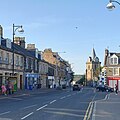 Inverkeithing High Street, looking north.
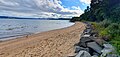 Inverkeithing Bay beach, off the Fife Coastal Path.
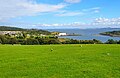 Forth View meadows, Inverkeithing.
 View from Friary Gardens over Ballast Bank Park, Inverkeithing.


See also
References
External links
Wikiwand - on
Seamless Wikipedia browsing. On steroids.
Remove ads